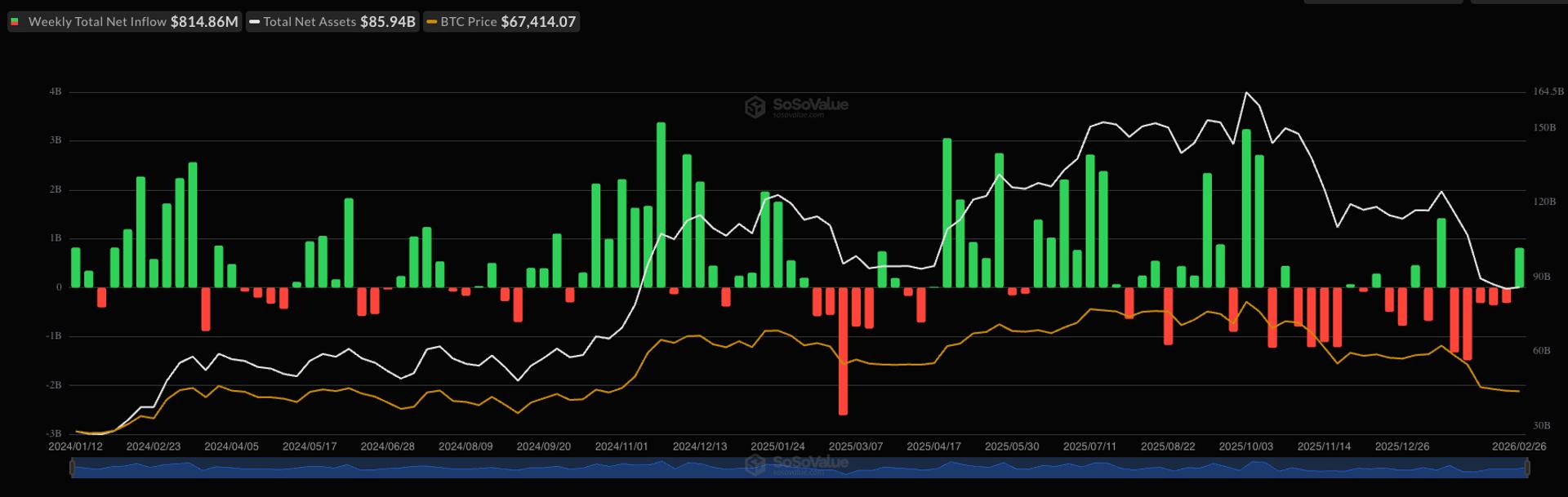
TL;DR
Inflows align with a rebound in the Coinbase Premium index, signaling renewed U.S. demand for cryptocurrencies.
The whole 9 yards of 💩
The Royal Flush here, folks, ready to riff on a story that makes both skeptics and hype-keepers sit up and nod with equal parts skepticism and giddy anticipation. Yes, the week we’ve all been watching—the one when U.S. spot bitcoin ETFs decided to throw a party and invite $1.1 billion to the dance floor in three days—has arrived. If you’ve been wondering whether this is a sign of a new bull run or just another feature on the same old rollercoaster, you’re not alone. I’ve got questions, and I’ve got a few reasons to be cautiously optimistic. Let’s unpack what this actually means without pretending this is the moment the entire financial universe shifts on a dime. First, the numbers are big enough to make your hedge fund cousin stop bragging for five minutes. $1.1 billion in three days isn’t a minor inflow; it’s the kind of liquidity that prompts exchanges to update their routing and custodial setups faster than you can refresh a price chart. ETFs linked to spot Bitcoin are not a new invention, but they’ve spent years living in something like a regulatory partial timeout—sufficiently exciting to appease the bulls, frustrating enough to avoid widespread adoption by the risk-averse. When you see that kind of capital moving in within a short window, you have to take notice, even if you’re wearing a skeptical badge that’s been sharpened by 2023’s volatility and 2024’s déjà vu rallies. Now, hand in hand with those inflows is a “rebound in the Coinbase Premium index,” which is the market’s way of whispering to us that U.S. demand isn’t just existing; it’s playing peek-a-boo with the rest of the globe. The Coinbase Premium—where you compare the price of Bitcoin on Coinbase Pro versus other venues—can swing with the temperament of a caffeinated cat. When it’s up, arbitrageurs are busy; when it’s down, retail capitulations can feel louder than a stadium full of fans at a concert you missed because you were stuck in the elevators of a data center. A rebound here signals that buyers in the U.S. are waking up with real purchasing power, not just chasing headlines. But let’s not put on rose-tinted glasses and pretend the chart gods have declared a new era. This isn’t the moment where the mass market suddenly discovers “Bitcoin as a core asset class” and starts treating it like a bond replacement or a reliable store of value akin to gold, unless your idea of gold is “digital, highly volatile, and subject to meme-driven volatility.” ETFs in the spot space have the potential to unlock accessibility, yes, and they bring more traditional money onto the dance floor. Yet ETFs also bring counterparty risk, management fees, and the ever-present issue of tracking error. The last thing the sector needs is an unchecked chorus of “this time is different” when the macro winds remain as tempestuous as a pre-summit investor conference. In other words: the headline is exciting, the implications nuanced. You don’t want to confuse a liquidity boost with a tectonic shift in market structure. ETFs can funnel more legitimate cash into Bitcoin without forcing every wallet to become a fiduciary of its own risk, but they don’t magically remove the risk. They may standardize access, but they won’t standardize volatility. If you’re tempted to treat this as “the moment U.S. institutions finally adopt Bitcoin as a core holding,” pause. The savviest players know there’s a spectrum here: from familiar retail flows to truly institutional onboarding, and somewhere in the middle sits regulatory clarity, tax treatment, and the long-awaited custody maturity that actually makes big players comfortable enough to put significant assets under Bitcoin’s care. There’s also the subtle snark of “what changed, really?” The ETF option has been around for a while, and inflows have come in bursts before. The market’s memory is short and the headlines are loud. A big inflow over three days might be a sign of a renewed appetite, or it could be a reset after a pullback, or simply a recalibration as traders rotate capital in anticipation of some macro inflection point. The Coinbase Premium’s rebound is a corroborating signal, yes, but the market is full of signals that can mislead if you take any single one as a compass. It’s the combination that matters: new vehicles for access plus price-discrepancy signals that suggest real demand. That’s not nothing, but it’s also not a victory lap for the loudest optimists. So, what should you, dear reader, take away? The prudent stance is a hybrid: acknowledge the momentum while staying grounded in risk management. Spot ETFs offering more on-ramp options for investors can broaden participation, potentially increasing daily liquidity and reducing some execution frictions. That’s worth noting. At the same time, remember that “inflows” don’t equal “risk-free gains,” and that the market’s next move is still tethered to macro forces, regulatory weather, and the stubborn reality that digital assets can swing from euphoric highs to humbler basements in a heartbeat. As for The Royal Flush’s verdict, here’s the clean take: this is a healthy, encouraging data point in a landscape that has needed a bit of good news on the accessibility front. It’s not a proclamation that Bitcoin has conquered the world, nor is it a guarantee of a perpetual ascent. It’s a sign that the infrastructure to support broader participation—spot ETFs, better premium signals, and the harnessing of demand in a regulated vehicle—is getting sturdier. That’s exciting, but it should be met with the same skepticism you’d reserve for a flashy keynote where the presenter promises “the future is now” while the slides hide a few critical caveats. So buckle up, stay curious, and don’t confuse a strong week for a decisive trend. The market loves a narrative, and this week’s story is compelling enough to deserve a chapter in the history books, but not a full-volume saga just yet. The Royal Flush is watching, snark calibrated, ready to celebrate real progress—and to call out the hype when the band starts playing before the song actually kicks in.
- source